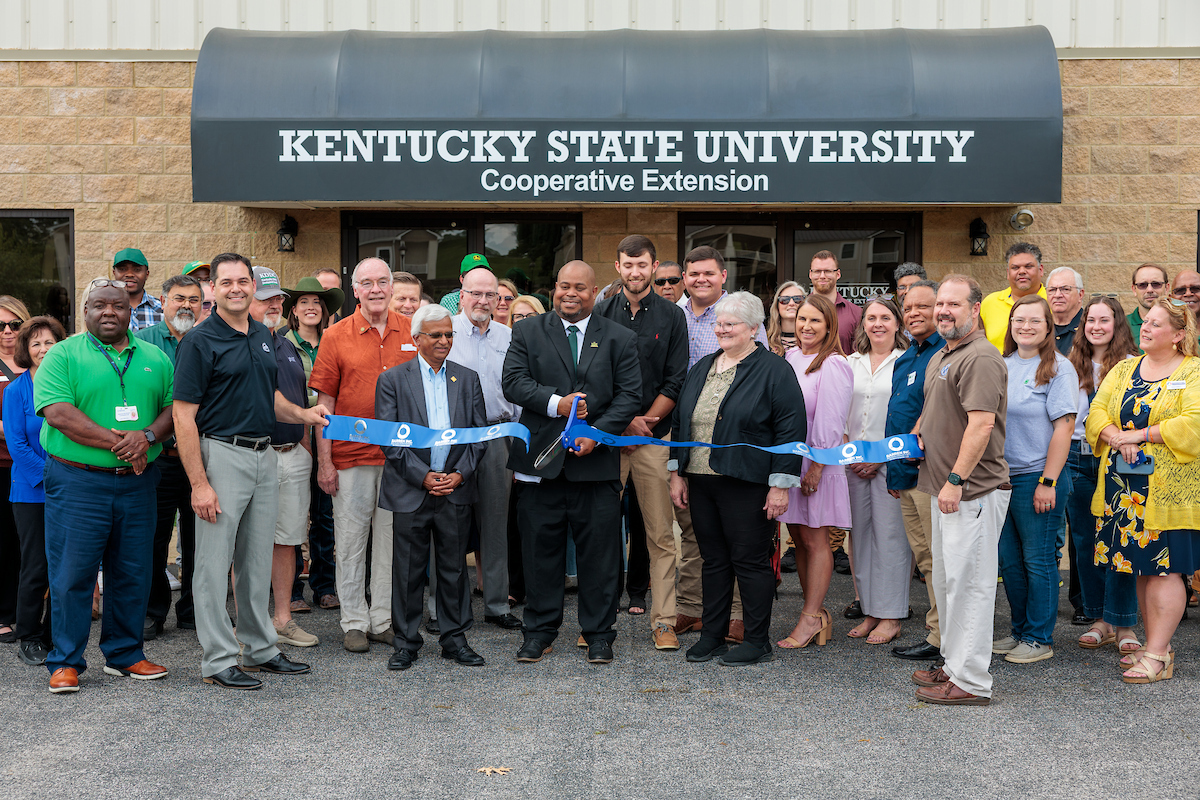
New Â鶹ֱ²¥ facility in Barren County pairs high-precision forage
analysis with expert interpretation for beef and dairy operations
FRANKFORT, Ky. — Good hay is money in the bank for livestock producers. Kentucky State
University’s Hay Testing Lab in Glasgow helps farmers and ranchers verify forage quality
quickly and make more informed feeding and management decisions, with high-precision
testing paired with expert interpretation.
 While the lab was strategically located at the University’s Cooperative Extension
office in Barren County, generally recognized for having Kentucky’s highest cattle
inventory and often cited as having nearly twice as many cattle as people, the impact
continues to expand statewide.
While the lab was strategically located at the University’s Cooperative Extension
office in Barren County, generally recognized for having Kentucky’s highest cattle
inventory and often cited as having nearly twice as many cattle as people, the impact
continues to expand statewide.
Since the lab , it has analyzed nearly 700 hay and forage samples for more than 120 producers across
26 Kentucky counties, with numbers growing weekly, delivering timely results and practical
guidance that help strengthen feed and management decisions.
The volume and county-by-county reach show the need for accessible testing and consultation
extends well beyond Barren County, especially in a state where hay and forage underpin
Kentucky’s livestock economy, occupying nearly 1.8 million acres across about 37,000
farms, and forage quality directly influences livestock performance and farm profitability.
Offered free of charge to Kentucky producers, the service is built for real-world
decision-making. Trained professionals help farmers translate results into next steps
for rations, hay marketing, and future cutting, fertilization, and storage decisions.
“Forages and hay are some of Kentucky’s most profitable agricultural commodities and
occupy the largest acreage in the state. Not to mention that with livestock production
central to Kentucky agriculture, forage quality, and therefore forage quality testing,
directly influences farm economics,� said Dr. Abbigail Hines, assistant professor
of animal science.
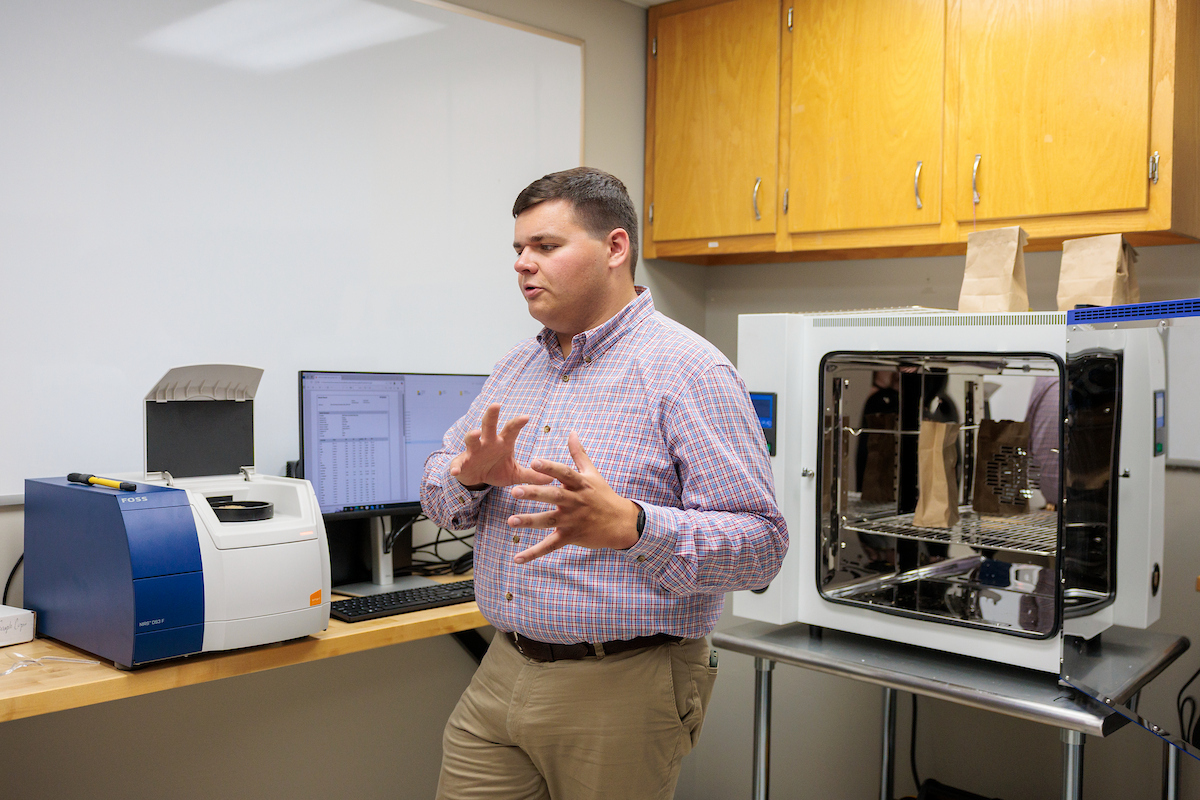
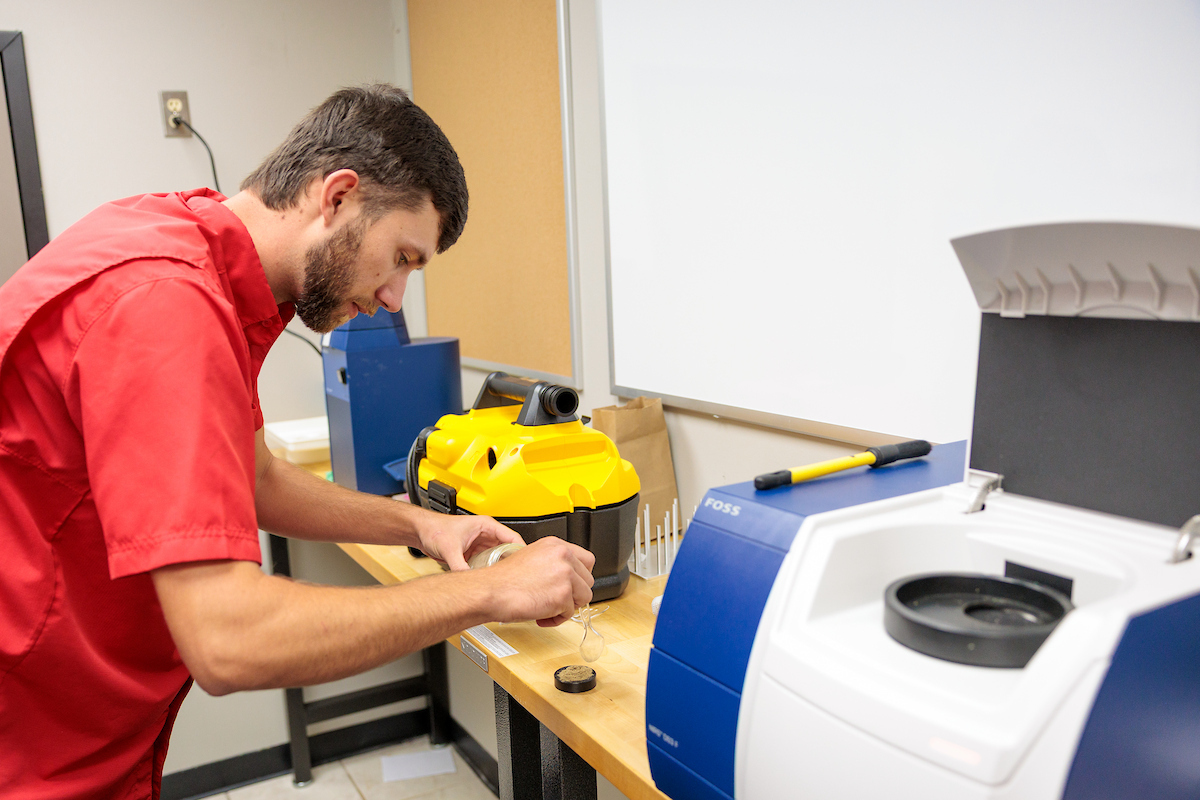 Using near-infrared spectroscopy technology, the lab quickly measures key nutritional
components such as relative feed value, crude protein, and mineral content. It can
also help identify concerns tied to nitrates and mycotoxin contamination.
Using near-infrared spectroscopy technology, the lab quickly measures key nutritional
components such as relative feed value, crude protein, and mineral content. It can
also help identify concerns tied to nitrates and mycotoxin contamination.
Producers cannot improve forage quality after baling, but they can use testing to
make better decisions with what they have. Reliable results and interpretation help
match hay to animal needs, reduce costly guesswork in supplementation, and protect
both performance and margins.
Farmers and agricultural professionals helped shape the lab’s design after citing
limited access to quality testing and inconsistent help interpreting results.
“From multiple sources, especially from area farmers and Ag professionals, we learned
about the opportunity to positively impact farmers by increasing both cost-savings
and profitability through hay and forage testing. We see this service as a bottom-line
support,� said Dr. Marcus Bernard, dean of the College of Agriculture, Health, and
Natural Resources.
Kentucky State built the lab around that producer feedback, pairing high-precision analysis with interpretation and consultation so results translate into decisions producers can use immediately.
“Realizing the limited availability of services and the potential revenue loss to
our farmers, we are jumping in to help them realize the full economic potential of
their hay, feed, and forages with high precision analysis of these products,� said
Dr. Avinash Tope, associate dean and associate professor of human nutrition and food
safety.
The hay testing lab is located at 107 Myrtle Street in Glasgow. For more information,
contact Kentucky State’s Barren County Cooperative Extension Office at 270-282-0982
or reach out to Tyler London at Tyler.London@kysu.edu or Jacob Hall at Jacob.Hall@kysu.edu.