Field experience deepens training in silage and rumen health
FRANKFORT, Ky. — Â鶹ֱ²¥ is expanding hands-on learning that equips
students with practical, job-ready skills for the dairy and livestock sectors. A centerpiece
of that effort is the Animal Nutrition course, which blends classroom instruction
with experiential learning tied to real production decisions.
Animal nutrition is essential to farm success. Nearly 70% of farm expenses are related
to nutrition, making feed quality, preservation, and digestive health central to performance
and profitability.
Throughout the semester, students completed hands-on activities designed to deepen
their understanding of livestock nutrition and management. The approach is especially
valuable for students without prior livestock experience. In lab settings, students
explored the structure and function of the cow’s stomach by dissecting a rumen and
examining its compartments. The work helped connect anatomy to applied nutrition concepts
they will use in the field.
Students also learned feed production and preservation skills that help producers
manage shortages. These techniques are vital during winter and prolonged dry seasons,
when feed availability can tighten quickly.
Because dairy remains a major pillar of the U.S. agricultural economy, the course
emphasized silage production as a core competency for future animal scientists and
producers. While large-scale dairy production and silage work have been limited at
Kentucky State, students practiced small-scale silage production and conservation
techniques aligned with industry expectations.
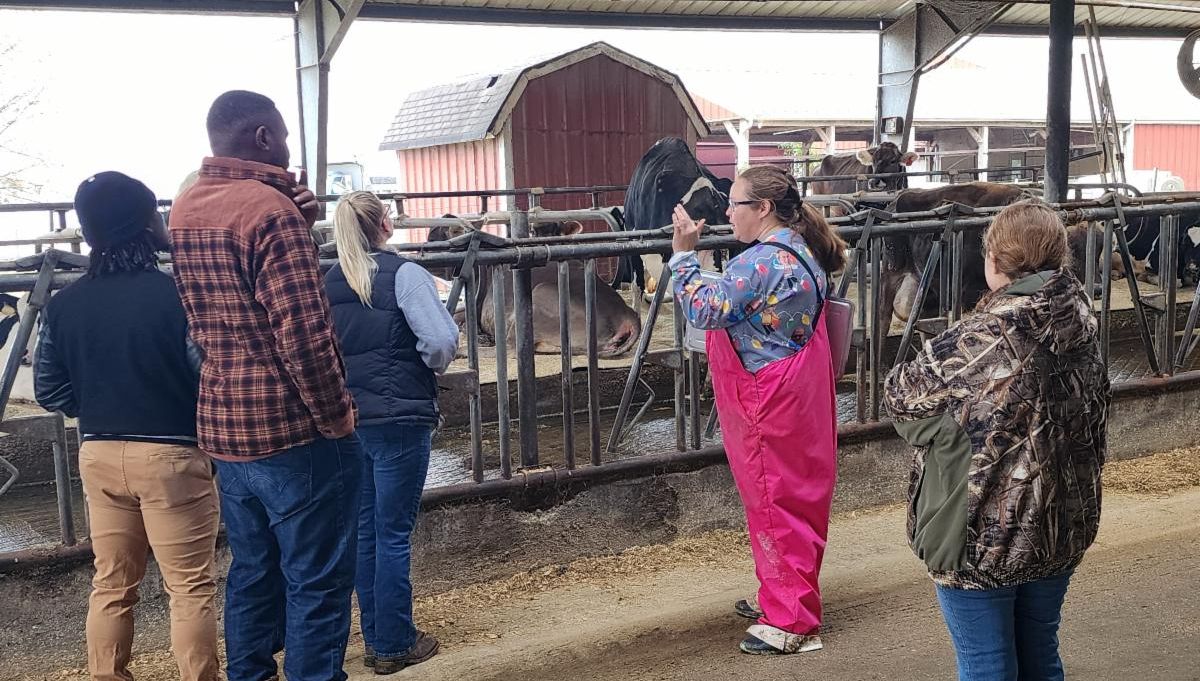
To broaden exposure and scale, Dr. Valens Niyigena, instructor for Animal Nutrition,
organized a collaborative field visit with the dairy program at Eastern Kentucky University.
The visit gave students a larger-scale view of how classroom concepts translate into
modern dairy operations. During the visit, students observed commercial-level silage
production and explored advanced dairy technologies. They also learned about robotic
milking systems that support milk harvesting, record keeping, and early disease detection.
Building on earlier rumen dissections, students observed rumen function in live, cannulated
animals. They collected samples and examined microbial populations under a microscope
to better understand digestion and animal health.
“The cannulated steer was very useful to show how rumen digestion works and viewing
rumen microbial population was very educational to me,� said Jacob Wells, a student
in the course. “In the future, I plan to educate producers and I would love to show
them a cannulated cow in order to enhance their understanding in animal nutrition.�
Kentucky State leaders noted that partnerships like this help strengthen student learning
and the region’s dairy and livestock sectors. The University plans to expand experiential
opportunities in dairy and animal nutrition through continued institutional collaborations.
Students interested in gaining hands-on experience in animal nutrition or dairy science
can enroll in AFE 307 (Animal Nutrition) in Fall 2026. Students, community members, and those interested in Extension-related dairy activities
may also contact Dr. Niyigena or the Kentucky State Animal Science team to learn about
ways to get involved.